If you just got a rejection letter from your dream animation school, what you read next might save you two years and $75,000 in student debt.
INDUSTRY PERSPECTIVE · FROM THE DIRECTOR'S DESK
Let me start with something that might surprise you.
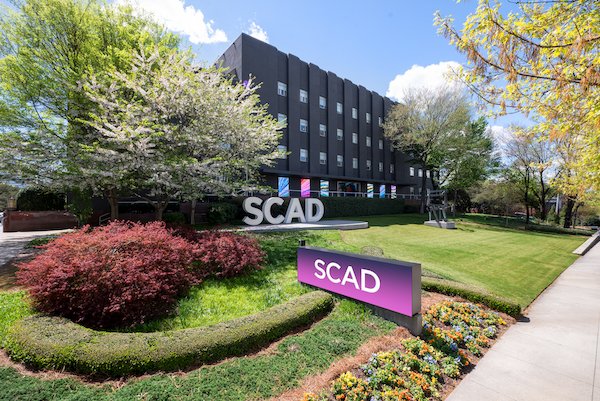
SCAD - the Savannah College of Art and Design - accepts a higher percentage of applicants than most people realize. Which means their rejection letters say more about capacity than talent. The beautiful campus and polished recruitment create an impression of exclusivity the numbers don't support. If you didn't get in, you likely were not outcompeted by a more talented pool. You were probably just late to a school that was already full.
So, if you just received a rejection letter, or if the tuition costs for four years moved it off your list of possibilities, it is worth taking a breath and putting it in perspective. The rejection stings - that is real and valid - but it is not a verdict on your talent or your future.
And if it helps to hear this: I was rejected from CalArts' animation program too. I came in through the art program instead and transferred into animation once I was there. By the end of my freshman year I was one of three students out of 69 selected for the Producer's Show. The door I wanted was closed, so I found another one - and it led exactly where I wanted to go. An opening to prove myself and then a 35-year career in film, games, and television.
A rejection letter is not the end of your story. Sometimes it is just a sign that there is a better road waiting for you.
What SCAD Is Actually Selling
SCAD is genuinely good at several things. The facilities are world-class. The campus environments in Savannah, Atlanta, Hong Kong, Lacoste - are beautiful and immersive. The school invests heavily in industry connections and hosts strong guest lecture programs. For certain disciplines and certain students, it delivers real value.
But SCAD is also a business, and a large one. It enrolls over 15,000 students across all programs. It has perfected the art of the recruitment experience: the campus visit, the portfolio review, the financial aid conversation - in a way that can make the emotional pull of attending feel like a calling rather than a transaction.
Here's the transaction: SCAD's tuition runs approximately $40,000 to $42,000 per year before housing, materials, and fees. A four-year BFA in Animation from SCAD will realistically cost you $200,000 or more, the vast majority of which most students finance through loans.
Then you graduate into an industry where entry-level animator salaries typically start between $55,000 and $65,000, and double that in cities like Los Angeles or New York where cost of living is extreme. The math is brutal, and it's math that SCAD's recruitment materials don't show you.
For what it’s worth, I worked in LA for 30 + years at every major studio and also in San Diego and San Francisco in the gaming industry, and only met one person from SCAD.

The Specialization Trap
SCAD's animation curriculum is heavily weighted toward 3D animation and visual effects, the disciplines most aligned with film and television production pipelines as they existed five to 10 years ago.
That was a reasonable bet in 2020. It's a more complicated bet in 2026.
The studios that have contracted most severely in the recent industry downturn were precisely the ones running large 3D production pipelines, streaming services and visual effects houses that over-expanded and then cut deep. The artists who have navigated the contraction best are the ones with broader skill sets: people who can storyboard, who understand character design, who can work in both 2D and 3D, who know what pre-visualization is and why it matters.
I built the curriculum at Hollywood Animation Academy after thirty years of working for major studios and watching who thrived and who struggled when the industry shifted. I had to learn to sink or swim when Toy Story changed feature animation into 3D going forward. The answer was always the same: versatile artists with strong fundamentals outlast specialists every time. When one door closes, they can walk through another one. Specialists are often left waiting for their specific door to reopen. I was able to go from feature films to television to games and back when needed.
SCAD's program produces skilled 3D artists. That's genuinely valuable. But it's one lane on a wide road, and the lane has gotten more crowded and more volatile. Modeling and Rigging will be automated in the next year or two, and so I highly advise anyone who is going to a 4 year school to try to bypass those courses for more animation and storytelling.

The Geography Question
Here's something that rarely comes up in the rejection conversation: attending SCAD means committing to living in Savannah, Georgia, or Atlanta for four years, or pursuing the online option which - at full tuition - is a difficult value proposition to defend.
The animation industry is not in Savannah. It's in Los Angeles, with secondary clusters in New York, Vancouver, and Austin. SCAD has alumni networks in those cities, but you'll still be building your own path to them after graduation, with a significant debt load, from a starting point that isn't close to where the work is. That Alumni bridge is likely not going to be as much of a bridge as you think it will.
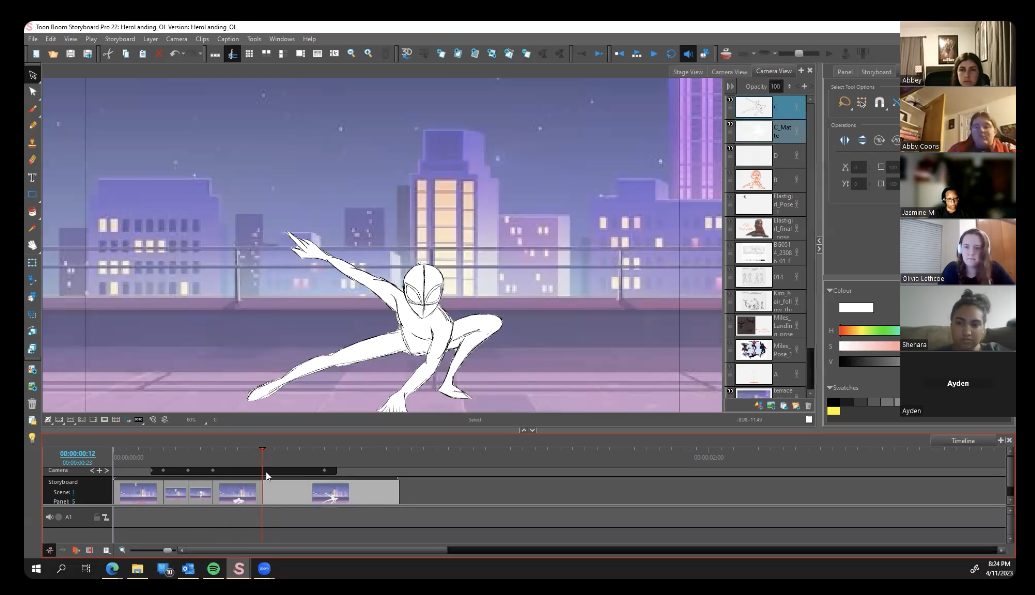
Hollywood Animation Academy in Kansas City offers serious animation training without taking on six figures of debt, or spending four years far from your support system. We offer 2 years in person with great industry veterans teaching every class daily. The program has 2400 hours of class time learning animation in 2 Years compared to 600-900 in a 4 year degree program. There are directors from major studios who also contribute online in our live classrooms. We fly out guests to work with students as they get close to graduation to support their portfolio’s getting the best finishing results. Our online programs are built for students who are serious about the craft and serious about their future, not students who need a campus lifestyle to feel like they're getting an education. Our campus is beautiful as well, but much smaller, and it allows us to pass savings on to our students.
We have a two-year certificate program that is in person and online but we always encourage in person because it keeps your energy higher. When you see the other students working on their projects next to you it breeds opportunity to share ideas and inspiration to level up every assignment. If you study online, accountability is the biggest part of working from home. Having an instructor in the room or walking the room always ensures you are getting the most out of the course. Daily feedback and energy will produce 30% to 50% better results. The Kansas City cost of living and housing is 10-15% lower than the national average. Our students work at their desks like a studio job. Their desks are theirs and theirs only for two years. Big difference.

What Actually Gets You Hired
I've been in the rooms at major studios where portfolios get reviewed and hiring decisions get made and have reviewed hundreds of portfolios. I can tell you with complete confidence what those conversations sound like.
Nobody asks where you went to school first. They watch the reel, and within 10 seconds you win or lose. They look at the quality of the drawing, the understanding of movement, the storytelling instinct, the range. If those things are strong, the reel continues past 10 seconds. If they're weak, it doesn't matter what name is on your degree. Fact.
The school you attend gives you the instruction, the feedback, and the time to build that portfolio. That's the actual product you're buying. The name of the school on the diploma is secondary, mostly never seen.
What the best training does is put you in front of instructors who have done the work at the highest level and can show you specifically, concretely, and honestly what the difference is between work that gets you hired and work that doesn't. That's what we do at Hollywood Animation Academy. Our instructors have worked on Looney Tunes, The Simpsons, Toy Story 2, Finding Nemo, Tomb Raider, Gears of War, X-Men, Spongebob, and more. They're not academics teaching animation theory. They're professionals who spent careers in the rooms you want to be in.
The big advantage you need is both daily professional guidance and major studio-level projects that give you the real-world structure to do work that looks like the studios do. Art schools and fundamental animation programs do not create professional-level projects for students to do. We do. Only 1 in 1000 student films is made at a level that would make you hirable.
The Honest Path Forward
If SCAD or another high-dollar program is now out of the question for you, here's what I'd tell you to do right now.
Don't let the emotional weight make the decision for you. Take a breath. Then evaluate your actual options against what actually produces careers, not against which school has the most beautiful Instagram presence.
Look hard at your portfolio and find the best instruction you can access to make it stronger. That's the whole game. Everything else is noise.
If you want to see what serious animation training looks like without the $200,000 price tag and the cross-country relocation, start with our 8-week online intro course. $1,500. Real instruction. Real feedback from working professionals. No obligation beyond showing up and doing the work.
Come see what your portfolio could become before you make any decision about what comes next.

One More Thing
Walt Disney started his career in Kansas City. He wasn't in Los Angeles. He wasn't at a prestigious institution. He was in the middle of the country, learning the craft, building the work.
The geography of where you start has never determined the height of where you finish. The work does that.
Here’s to your dreams - one way or another - you will get there!
Gavin Dell
Founder of Hollywood Animation Academy
Learn more about HAA online Introductory Courses
Hollywood Animation Academy’s Intro to Animation online classes are exactly designed for that. Join a small group and your instructor online live via zoom, and get ready to learn!
You’ll learn real industry tools hands-on with software access
Build your first professional-quality animations
Understand how storytelling actually works
Discover what part of animation you’re best at
Get taught by people who have worked in real studios
And walk away with portfolio pieces, not theory
Before choosing a college or committing to an animation career path, this class gives you clarity, confidence, and a real taste of the industry.
If you’re serious about your creative future, these courses are a smart way to find out if animation is truly your passion!
Are you ready to dive in to the two year Certificate program? Or thinking about it? Contact our student advisor to learn more about our program.